America’s cold civil war heats up

Charlie Kirk tosses MAGA hats to the audience at his American Comeback event.

On Wednesday, the entire country witnessed the gruesome assassination of Charlie Kirk as he spoke before a crowd at Utah Valley University. His death was shocking both for the visceral nature of the gory footage and for the deep implications and ramifications it holds for America’s heated political moment.

Kirk was the cofounder of Turning Point USA, a group dedicated to converting and organizing Republican youth. He was a prolific and popular far-right commentator known for his abrasive debate style, which he typically employed against college students, as well as his enthusiastic support of President Trump and advocacy for Christian conservatism, both at the level of politics and the level of home life. 

At the moment he was killed, he was, coincidentally, debating American gun violence with an audience member – at virtually the same time as, next door in Colorado, America was hosting yet another school shooting

Obviously, there is something deeply wrong with this moment and with this country. No one can live here and not feel it if they have even a minimal level of awareness. 

So while this assassination speaks to multiple issues, including gun proliferation, it’s become a case study for our extremely elevated culture war rhetoric. And it all adds up to a grim reality: Whether we realize it or not, we are already in a cold civil war. It’s still up to us how hot it gets, but we are not currently on a course toward cooling tensions.

The pretext for increasing fascism

As of this writing, Kirk’s assassin is still on the loose. As far as we know, there is no suspect and no known motive, though that hasn’t stopped people from speculating. The natural assumption for many seems to be that one of Kirk’s political opponents committed the crime. President Trump quickly blamed “the radical left.” And while the killer may well turn out to be a leftist, Kirk had opponents on both the left and the right, including neo-Nazis

With only roaming speculation to go on, conservatives immediately called on Trump to dramatically escalate his war on “the left,” a collective that, depending on how you define it, could include literally half the country. 

  • Laura Loomer, a far-right influencer who has been in and out of Trump’s inner circle, instantly tweeted, “It’s time for the Trump administration to shut down, defund, & prosecute every single Leftist organization… Once and for all. The Left is a national security threat.” 
  • The X feed of another far-right influencer, Mike Cernovich, was filled with reactionary statements and veiled threats against “the left” broadly. 
  • The right-wing troll account, Libs of TikTok, tweeted, “THIS IS WAR”.
  • Far-right radio host Michael Savage called on Trump to revoke the broadcast license of MSNBC, essentially blaming their programming for Kirk’s assassination.

It’s not clear what crimes, exactly, Loomer wants prosecuted, and her vague phrase “Leftist organization” might include anything from the Democratic Socialists of America to the Democratic Party to a university, scientific or medical institution, or historical society. And since we have no idea at this point who the killer is, the declaration of war from Libs of TikTok could be aimed at just about anybody. In addition to these extremist takes, there have been innumerable calls for more violence from the right.

At this point, it almost doesn’t matter who killed Kirk. The stage is set, and it’ll be impossible to course-correct the narrative no matter what else we learn. But the fact that his assassination ratcheted up tensions so dramatically and so instantaneously speaks to the political moment we were already in long before he was killed — a moment Kirk himself contributed to. Some of us are simply chomping at the bit to go to war with each other.

The political violence that already surrounds us

We are in the midst of a violent political era. To take just one glaringly obvious point: President Trump has sent troops to occupy two major cities run by political opponents and regularly threatens more such actions, even using the imagery of the most brutal war movie ever made, Apocalypse Now, to describe how he plans to treat Chicagoans. 

Make no mistake: These are violent provocations. How long can Trump round up and deport people’s friends, neighbors, and coworkers, and intimidate citizens with armed troops, before some serious fighting breaks out? And if and when that happens, where will it lead? It will pour more fuel on the fascist fire, empowering Trump to reach and take a little more, necessitating ever-more forceful pushback from his opposition.

And how long can these occupations be combined with the white-hot rhetoric of the Loomers and Cernoviches of the world before something big ignites? How long before Trump decides to take their advice and declare everyone to the left of Sean Hannity an official enemy of the state, subject to searches, confiscations, imprisonment, or worse? It’s not that fantastical. His most high-profile supporters are calling for it. The shock troops are already in the streets.

Don’t let Republicans use this moment to gaslight you into thinking political violence is unique to, or primarily a feature of, the left. This is the party that turns killers like George Zimmerman and Kyle Rittenhouse into heroes. This is the party that worked on a series of bills in states around the country to protect drivers who run over protesters. This is a party that has run a 24/7 news operation for 30 years straight with some of the most incendiary, zero-sum rhetoric in the history of propaganda. Year after year, crime data is clear: right-wing extremism accounts for far more violence in America than the left.

Even beyond politics, America is an extraordinarily violent nation that visits carnage upon people all around the world. We have normalized genocide in Palestine, revealing ourselves as a nation that just doesn’t care much about the worst form of violence imaginable. And at home, we have all but grown accustomed to regular massacres of our schoolchildren. Even Kirk once said, in a quote that went viral after his assassination, “I think it’s worth it to have a cost of, unfortunately, some gun deaths every single year so that we can have the Second Amendment to protect our other God-given rights.”

Just who was Charlie Kirk?

Because of some of his past remarks, some observers found Kirk’s end poetic. You don’t have to look too hard to find people openly celebrating on social media. I won’t do that, but I also won’t write a fawning eulogy for a man whose impact on the country, and the world, was so toxic and grim.

Kirk’s operation, TPUSA, was funded by dark money from oligarchs, fossil fuel companies, and big business. His function as a propagandist was to inflame the tensions of culture wars, goading working-class people into bitter fights with one another over trans bathrooms or “traditional marriage” while shielding the high-level crimes of power — things like looting the lower and middle class, shredding our social safety nets, and bankrupting our national trust through global imperialism and war.

Kirk died doing what he loved best: debating a liberal. And he was debating him in his usual style, injecting polemic rhetoric to confuse and frustrate his interlocutor. He was pushing an idea that trans mass shooters are a major problem, and in the process inciting more hatred for trans people, despite them committing a vanishingly small proportion of mass shootings in America. 

Even in this one example, the last words of his life, we can see that Kirk did not engage in good-faith debate. He was not in the business of productive dialogue that brings Americans together. In the wake of his murder, outlets have been compiling some of his greatest hits, including:

  • On the military occupation of America’s streets: “We got to go hard. We got to go big league. We’re talking National Guard, tanks – every street, you need military.”
  • On affirmative action and successful Black women: “You do not have the brain processing power to otherwise be taken really seriously. You had to go steal a white person’s slot to be taken somewhat seriously.”
  • On the civil rights movement: “MLK was awful… This guy is not worthy of a national holiday,” and, “We made a huge mistake when we passed the Civil Rights Act in the 1960s.”
  • On the role of women: “Maybe one of the reasons that Taylor Swift has been so annoyingly liberal over the last couple of years is that she’s not yet married, and she doesn’t have children… Reject feminism. Submit to your husband, Taylor. You’re not in charge.”
  • On the genocide in Gaza: “They brought it upon themselves.”
  • On trans people, a favorite and perennial target: “Against the natural law… A throbbing middle finger to god.”

One could go on and on. And, to be fair, if you comb through thousands of hours of recorded dialogue from almost anybody, you will find some nuggets that look ugly. But the picture is consistently clear, and this rotten philosophy has undoubtedly contributed to hate and division in America.

What comes next?

Trump has called on the nation to fly flags at half-mast in honor of Kirk’s memory. This is another provocative, political move. Kirk was the victim of a terrible act of violence, yes. He was also a bad-faith propagandist who put mental poison into the world. Both things can be true, and neither one changes the other. We can condemn violence without compelling people to mourn someone who called their existence an abomination. If you’re conflicted about it all, remember Kirk’s own words: “I can’t stand the word empathy, actually. I think empathy is a made-up, new age term that — it does a lot of damage.”

We should not let Kirk’s death ignite more violence. Sadly, we have a president who is possibly the poorest-equipped person in history to provide a steady hand and guide us to calmer waters. Instead, he could use it as justification to ramp up his occupation of American cities, recruit more angry conservatives to his masked army of ICE agents, restrict voting and speech rights, and make other fascistic moves. Plenty of his most fervent acolytes are already pushing him in this direction.

I see nothing good in the assassination of Charlie Kirk. His rhetoric harmed this nation and the marginalized groups he targeted, and that deserves to be his legacy. But his murder does nothing to address the wrongs they face. It only rockets tensions through the roof and brings this country closer to an extremely ugly and dangerous edge. It empowers the worst, most fascistic impulses of an already dangerous administration. 

Things may simmer back down, but this is not a stable equilibrium for a nation to be in. Maybe something needs to break. Returning to normal is not an option. Normal is what brought us here. For my entire life, “normal” has been a relentless march toward increasing inequality and nonstop war. That’s nothing to look forward to for a society in the midst of a fundamental transformation. 

But it would surely be in everyone’s best interest not to erupt into a full-scale civil war. Your imagination is as good as mine at conjuring the horrors that might entail. The best thing is for people to realize their common interests, let one another live in peace and dignity, and oppose the forces in America that are selling our futures down the river — forces for whom Charlie Kirk was a devoted and effective sower of division.

South Park cracks the code for dealing with fascists

For ten years, opponents of President Donald Trump have struggled to adequately deal with his myriad abuses and scandals. When you run through the litany of crimes, lies, Constitutional violations, and cover-ups, you can’t help but sound like a complainer. Many Americans simply tire of hearing about it all, while MAGA supporters retreat to their own impenetrable infotainment ecosystem.

Maybe, then, the answer isn’t to give more persuasive arguments, but to simply show the Trump Administration for what it is, using the most grotesque, over-the-top caricatures possible.

That’s exactly what South Park has been doing in its new season. The second episode, “Got a Nut,” goes straight for the jugular with numerous high-ranking MAGA officials. It includes depictions of:

  • Secretary of Homeland Security Kristi Noem as a puppy-shooting ghoul with a melting face.
  • ICE as a masked, bumbling goon squad violently rounding up innocent people for explicitly racial reasons.
  • MAGA propagandist Charlie Kirk as an obnoxious racist obsessed with “master-debating” college girls.
  • Vice President JD Vance as the James Bond villain Nick Nack, a completely servile troll.
  • President Donald Trump as the crime boss behind it all, hiding out in his Florida palace with underage masseuses and his lover, Satan himself.

South Park doesn’t call these people names or point out their crimes in an articulately worded essay. It shows them in action doing despicable things, providing a window for MAGA, if they care to look, into how everyone who’s not inside the cult views these monsters.

Showing, not telling

The South Park approach is far more potent than the fact-based appeals journalists have made. As multiple scholars and thinkers have observed, such facts are ineffective against fascists like Trump for the simple reason that the fascist appeal is not to truth or logic in the first place, but to base emotion. This is why MAGA is primarily a coalition built around vague fears and anxiety over the loss of some intangible cultural quality (read: “traditional values,” typically a stand-in for whiteness, straightness, or some other perceived “normal” thing). Information doesn’t change their mind, because their beliefs aren’t rooted in truth.

For instance, it wouldn’t matter to a fascist that the vast majority of immigrants, documented or otherwise, are law-abiding, contributing members of society. The MAGA base simply does not want them here, and they aren’t interested in anybody’s circumstances or story or what the evidence says. So Trump is building a massive, secret army to round up dark-skinned immigrants in brutal ways, terrorizing communities by dragging people from their homes and public spaces in front of children and others, sending them off to foreign concentration camps in places like El Salvador. 

Words can’t adequately express the horror of this. It’s more poignant to convey the horror by showing it. And right now, only South Park is showing it in the truly ghastly way it needs to be shown. 

In the latest episode, a squad of untrained ICE goons raids a Dora the Explorer Live show, and even Heaven itself, to remove every last brown person. When new ICE recruit Mr. Mackey insists his job isn’t to “round up Mexicans” but rather to “detain foreigners who might be illegal,” the man he’s talking to sarcastically says, “OK!” – as in, “Sure, whatever you say, pal!” Kristi Noem’s face constantly melts off, only to be repaired by a makeup team in time for a photo op, underscoring MAGA’s obsession with superficial aesthetics. She also shoots every puppy she sees. Cartman and Clyde act as stand-ins for Charlie Kirk, abrasive, dimwitted pricks who win debates through nonstop verbal diarrhea. And poor Dora winds up massaging a creepy old billionaire at Mar-a-Lago, a decadent den of sin and corruption staffed mostly by teenage girls.

Without pulling a single punch, South Park executes the most cutting satire of MAGA yet, with plenty of humor and a good story throughout. It’s not even showing these people at their worst, it’s showing them for what they are. People inside the cult can’t see it. Even if they could, many wouldn’t care, and would support even more explicitly racist and violent policies. But for the few who can be reached, this is a visceral way to do it.

The call from inside the house

South Park has another advantage that makes it the perfect vehicle for this satire. The show has long been viewed, rightly or wrongly, as right wing-coded. Creators Trey Parker and Matt Stone aren’t wishy-washy, whiny, bleeding-heart liberals. They’ve always been politically incorrect, which has made South Park a rare common ground for both thoughtful social critics and boorish right-wing assholes alike.

Of course, Trump is also politically incorrect. It is surely politically incorrect to racially target human beings for extraordinary rendition, grab unwilling women “by the pussy,” be best friends with Jeffrey Epstein, and attempt an insurrection at the Capitol when you lose an election. But does that make these things good? Parker and Stone, perhaps unlike MAGA, realize that the answer is no.

Until now, MAGA may have thought Parker and Stone were on their side. This new season shows, definitively, that they’re not. They clearly see the Trump Administration as a rank, criminal cabal that has gone so far off the rails that they have no idea where the rails even are anymore. This is what MAGA supports: psychopaths who shoot puppies, racist goons eager to abuse anyone with darker skin than Ed Sheeran, and a reckless authoritarian running the nation from a decadent compound in Florida.

The show probably won’t get through to anyone in MAGA or change any minds, simply because minds in America don’t change easily. Some will laugh it off and ignore the meaning behind the jokes. Others will just say South Park has gone woke. But it’s inspiring to see creators tackle the Trump era in this way. It may sometimes be petty, and it may sometimes be juvenile, but let’s not forget who we’re dealing with here. They deserve no better.

I’ve been writing about politics since before the Trump era, and I’ve tried to give a balanced assessment from the beginning. And the balanced assessment is: He’s an absolute monster. Sometimes I get tired of researching and writing articles, of presenting facts that MAGA is programmed to ignore anyway, and I just want to scream: “This is a sleazy, corrupt toad of a man surrounded by lying, shameless sycophants and stupid, violent bigots, and I am rapidly losing patience and respect for anyone who can’t see it.” What I struggle to express in a journalistic essay, South Park makes plain as day with their utterly savage satire. They have truly captured the essence of this administration, revealing it for the depraved, demented carnival it is.

Satire and ridicule are far more effective weapons against fascism than reasoned arguments. We need far more of it. Since these people do not engage ethically or honestly, the best way to deal with them is with mockery and contempt. Forget trying to reach MAGA with kindness or understanding. Hold the mirror up to them instead. If there’s any humanity left, they won’t like what they see.

Pink Floyd feud becomes microcosm of broader war debate

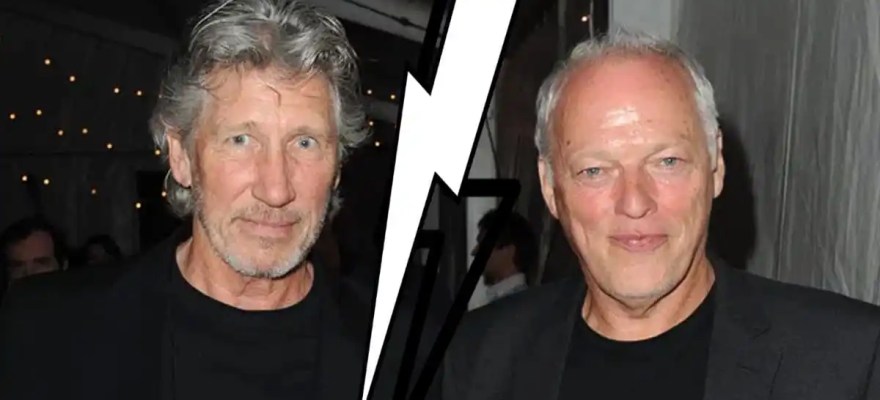
The former members of Pink Floyd have had a long-running and highly public feud ever since Roger Waters, the principal writer of the band’s best-known material, left the group in 1984. His former chief collaborator, lead guitarist David Gilmour, carried on using the band’s name, leading to bitter legal battles. Aside from a couple momentary reunions, the two showed no interest in burying the hatchet, let alone working together again.

Recently the feud exploded, going well beyond the confines of the band and bleeding into issues of geopolitics, war, and peace. On February 6, Gilmour’s wife, writer Polly Samson, tweeted, “Sadly @rogerwaters you are antisemitic to your rotten core. Also a Putin apologist and a lying, thieving, hypocritical, tax-avoiding, lip-synching, misogynistic, sick-with-envy, megalomaniac. Enough of your nonsense.” Shortly after, Gilmour concurred, tweeting, “Every word demonstrably true.”

Samson’s tweet was a shocking, vitriolic series of epithets that paint Waters as a complete and total scumbag. This is no mere difference of opinion. Plenty of people disagree with Waters, but Samson apparently sees him as an irredeemable, worthless human being who contributes nothing but evil to the world.

It’s worth asking what brought her to this venomous string of insults. The personal stuff is difficult for anyone to knowledgeably comment on, but Waters does have a long record of public statements that can shed some light on where she got “Putin apologist” and “antisemitic.”

Roger Waters on the Russian invasion of Ukraine

Waters has recently been vocal in his calls for a diplomatic resolution to the war in Ukraine. On February 8, he even addressed the United Nations on the matter. In his impassioned speech, Waters pleaded for an end to all wars, including the one in Ukraine. He also called for a reorientation of global priorities more broadly, speaking for the hungry, the cold, the sick, the oppressed, and the war-torn all the world over.

  • “The invasion of Ukraine by The Russian Federation was illegal. I condemn it in the strongest possible terms.”
  • “The Russian invasion of Ukraine was not unprovoked, so I also condemn the provocateurs in the strongest possible terms.”
  • “The only sensible course of action today is to call for an immediate ceasefire in Ukraine.”

Parts of Waters’s speech have been cherrypicked to dismiss him as a pro-Putin propagandist. In particular, his characterization of Russia’s invasion as “provoked” has drawn the most flack.

Saying an attack was “provoked” is not the same as saying it was “justified.” For instance, wondering what provoked Polly Samson to say what she said about Roger Waters isn’t the same thing as justifying her words. Simply trying to understand another’s motivation isn’t apologia. When something happens, thoughtful people ask, “Why?” And in most cases, whether they be interpersonal matters or war and geopolitics, the answers are complex.

It would be convenient if the war in Ukraine was simply a case of irrational, bloodthirsty Russian barbarians waging a war of conquest and the heroic US and NATO sending arms to secure peace. That’s the narrative shared by most establishment media and political figures, and it’s predicated on the perfectly reasonable notion that the invading force is the bad guy.

But Waters acknowledging that the US and NATO have antagonized Russia, particularly around Ukraine, is not the same thing as absolving Putin or acting as his propagandist. Nor is it victim-blaming Ukrainians for their predicament. Waters believes the war in Ukraine is a proxy war, provoked by Western powers, at enormous cost to the Ukrainian people.

And he is calling for a diplomatic resolution before the situation erupts into a nuclear World War III. He’s implored the West, particularly President Biden, to stop fueling the war and inflaming the tensions by pouring money and arms into it. Agree with him or not, those calls for peace don’t sound like the things an unforgivable monster – like the kind Polly Samson depicted in her tweet – would say.

Even today, in concerts, Waters consistently confronts enormous crowds with challenging calls for racial justice, economic security, and peace. He doesn’t have to put himself out there the way he does. Pink Floyd is one of the biggest bands ever and he could easily coast on royalties and reputation. But he can’t help himself because he is passionate, and it does matter to him.

Roger Waters, the alleged antisemite

Samson’s other accusation, which Waters has contended with for years, is that he’s antisemitic. It’s a tough charge to shake, and one that outspoken critics of Israeli policy are often confronted with. Because Waters is forceful with his language, it sometimes comes across as overtly hostile. Critics of Israel must not conflate the state with the Jewish people themselves. By and large, Waters has always been on the right side of that line.

Waters condemns Israel’s treatment of the Palestinian people, labeling Israel an “apartheid state.” It sounds salacious, but virtually every international human rights organization, including Human Rights Watch, agrees with Waters. He also criticizes the influence of the Israeli lobby in Washington, which some say plays into antisemitic tropes. But Israeli defense lobbies do spend a lot of money in Washington, and Washington does, in turn, send billions of dollars to Israel every year, equipping them with one of the mightiest militaries in the Middle East.

The Anti-Defamation League’s page, Roger Waters In His Own Words, primarily uses Waters’s criticism of Israel and groups like AIPAC as evidence against him. Arguably the most damning thing, perhaps even explicitly antisemitic, was a video Waters played in 2010 concerts that depicted the Star of David and a dollar sign together, which he later stopped using.

A huge part of Waters’s identity comes from losing his father in World War II at the tender age of five months. Waters has been committed to fighting the evils that took his father away from him – war, imperialism, and Nazism chief among them. He has always denied every accusation of antisemitism.

Not just a difference of opinion

As for the personal charges Samson throws – misogynist, liar, thief, hypocrite, tax-avoider, lip-syncing, envious, megalomaniac – only those who know Roger Waters can say. There’s little if anything in his lyrics or public statements to support those accusations. None of us are perfect, but Waters appears, for the most part, to be a fairly dedicated humanist and peacenik.

What’s so sad about this fight, though, is how Samson – and by extension, David Gilmour – employed the lowest of tactics to not only dismiss an ideological opponent, but to dehumanize him, reduce him to beneath contempt. Indeed, this is how many in the neoliberal establishment want to paint their antiwar critics: not just as naïve or wrong, but as villainous, evil, and vile enough, perhaps, to even deserve death.

The War in Ukraine brings out a lot of intense emotion, and with good reason. Any war should. But this war, in particular, has some incredibly unnuanced and aggressive supporters. Until we can break that cycle and that rigidity, it will only escalate.

Fifty years ago, Waters wrote about the folly of Us and Them mentality. Here he is now, being otherized by the partner with whom he recorded some of history’s most impressive and timeless popular music. That music carried a vital message and philosophy, and Waters sticks to it still, offering his perspective and searching for a way out of a deadly war that threatens to engulf the world. For that to prompt such an incredibly vicious tweet from someone so close in his life is incredibly sad.

The Crumbling of Elon’s Little Digital Dictatorship

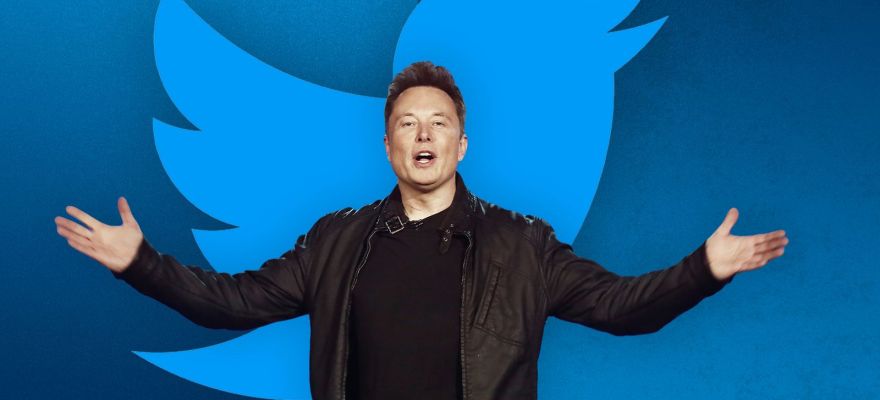
The world’s richest man, Elon Musk, has officially purchased the social media platform Twitter for the astronomical sum of $44 billion. It’s one of the most high-profile business transactions in recent memory, and the ensuing chaos has steadily unraveled both the myths Musk built up around himself and the myths we tell ourselves about billionaires and capitalist excellence.

Musk, age 51, was born into wealth. His father famously owned significant shares of an emerald mine, among other business and real estate ventures, while his mother was a fashion cover model. After college, the young Musk made a series of very savvy business decisions, helping to found PayPal and SpaceX and becoming the largest shareholder in Tesla. In the years since, Musk has invested heavily in his public relations, branding himself as a forward-thinking, genius inventor.

Until recently, that image largely held. But gradually, as Musk began making more peculiar and immature statements and as journalists dug deeper into his business practices and personal history, a different picture emerged. Now, with his acquisition of Twitter and all the ensuing, very public drama that’s entailed, it’s become clearer than ever that Musk isn’t a transformative savior who will guide mankind to a brighter future. He may not even be much of a businessman. He may, actually, be kind of a dunce.

Musk overpays for Twitter and scrambles to recoup his investment

For months after making his initial offer, Musk tried to back out of his deal to buy Twitter. The $44 billion price he paid for it is more than the GDP of most nations, and some $30 billion more than Twitter’s estimated value. Musk’s own net worth is estimated at around $180 billion, but it fluctuates dramatically as his unpredictable actions leave investors and stockholders in turbulence. To seal the Twitter deal, Musk put together $46.5 billion through a combination of personal financing, including by selling Tesla stock, and loans from a number of banks and investors.

Now that Musk is the owner, Twitter is delisted from the stock exchange. One of the world’s largest social media platforms, with some 240 million monetizable daily active users, is now Musk’s own privately held fiefdom. The company is no longer accountable to the usual bylaws or ethics, limited though they may be, of public corporations. And all that user data — pictures, direct messages, financial and personal information — is now in the hands of a man with utter contempt for the privacy and security of others, as is the platform himself.

Immediately after taking over, Musk began making big changes, all of which appear aimed at recouping his investment and paying off his creditors. He fired half the staff, ordered the other half to work 84 hours a week, and ended remote work. When it looked like Musk had laid off too many people, he tried to recall some of them. Senior people at Twitter have been resigning left and right.

Conservatives applauded much of this, viewing Musk as a decisive man of action and Twitter employees as spreading left-wing propaganda. Many of the laid-off workers were responsible for Twitter’s moderation of hate speech, communications, ethics, and advertising. Instances of the n-word skyrocketed 500% immediately after Musk’s takeover and right-wing conspiracy theories surged. Musk had previously complained that Twitter censored conservative voices in favor of liberal ones.

Shortly after taking over, Musk proposed an $8 monthly fee for verified users, apparently haggled down by Musk himself from an initial $20 in a Twitter thread with author Stephen King. Verification comes in the form of a blue check mark next to an account’s username that signals to readers the account is official. Charging for it is apparently an attempt to monetize Twitter’s users and sort of invert the site’s long-running business model. Before, Twitter’s users were the product and advertisers were the customers, paying for users to see their ads. Now, Musk wants users themselves to pony up as well.

Comedy is now legal on Twitter — except for this, this, and this

Musk has often branded his decision to buy Twitter as an attempt to restore free speech to the platform, proudly tweeting, “Comedy is now legal on Twitter.” Trolls and other users very quickly tested the limits of that theory.

After Musk began selling verification, a rash of phony verified accounts began impersonating official accounts, posting satire and parody from them. Many of these pretended to be Musk himself, posting about his association with convicted child sex trafficker Ghislaine Maxwell, his dodging of taxes, and offering to give away cryptocurrency. Musk quickly clamped down on these accounts and suspended them, but in some cases, not before they had significant, real-world consequences.

On November 10, an account impersonating pharmaceutical company Eli Lilly tweeted, “We are excited to announce insulin is free now.” The real company quickly put out a tweet correcting the information — they are not giving away insulin, despite the fact that its creators gave it away and wished it to be affordable for all — and Twitter suspended the phony account, but the damage had already been done. Eli Lilly’s stock, along with two other pharmaceutical companies, took a significant hit by the time the market closed.

In many ways, these parody accounts are laudable. They have given high-profile spotlights to corporate misdeeds. But the companies themselves certainly don’t like them. And Musk’s own behavior can’t be reassuring — he posted laughing emojis under a tweet spotlighting parody accounts of Nintendo mascot Mario giving the middle finger and President Joe Biden talking about self-fellatio. Especially at first, it seemed to be primarily his own image that he’s dedicated Twitter’s resources to upholding.

All the chaos has sown distrust and made advertisers wary of Twitter. In addition to the brand risks they face from impersonations and less-regulated hate speech, there is Musk’s personal brand, now inextricably linked to Twitter as a platform, which has slowly morphed from visionary savior of humanity through capitalism to right-wing, anti-woke, sophomoric man-child and reckless business tyrant.

Musk’s behavior at Twitter is high-profile because of the nature of the platform and his own inability to keep quiet on it. But it’s perfectly in line with his practices elsewhere. His companies have committed a litany of labor and product safety violations, including active union-busting, illegal retribution, unsafe work spaces, and flammable solar panels. It’s tempting to buy into his hype, and believe that he is a benevolent billionaire who offered the market cleaner, more sustainable choices. But that doesn’t seem to be who Elon Musk is at his core.

The future looks chaotic

No one knows what will ultimately happen with Twitter. Musk himself has already floated the idea that it could go bankrupt next year. All the dumb decisions — to amplify voices that pay over those that don’t, to fire employees responsible for curating a minimally decent public space — are Musk’s own. The average user experience hasn’t dramatically changed yet, but if the company can’t pay its workers or its bills, anything could happen.

Twitter has always had issues. Social media itself is inherently problematic. But it’s still remarkable to watch Musk transform a potentially viable digital town square into a wasteland, at enormous financial expense to himself and his investors. So far, the whole debacle been a spectacular illustration of just how far the myth of the genius billionaire is from the reality. And, just maybe, it should give us cause to reexamine how we exalt rich people in general.

US Outbreak: How Monkeypox Spread in a Failing State

The new order of our times seems to be that everything must get worse. Because one plague was not enough, we’ve added another: monkeypox, a close relative of smallpox that causes flu-like symptoms and painful, pus-filled blisters. Making matters even worse, it’s spreading primarily in gay communities, giving new life to old bigotries and complicating public health messaging.

Continue reading

Why Overturning Roe Could Be the Last Straw for Many

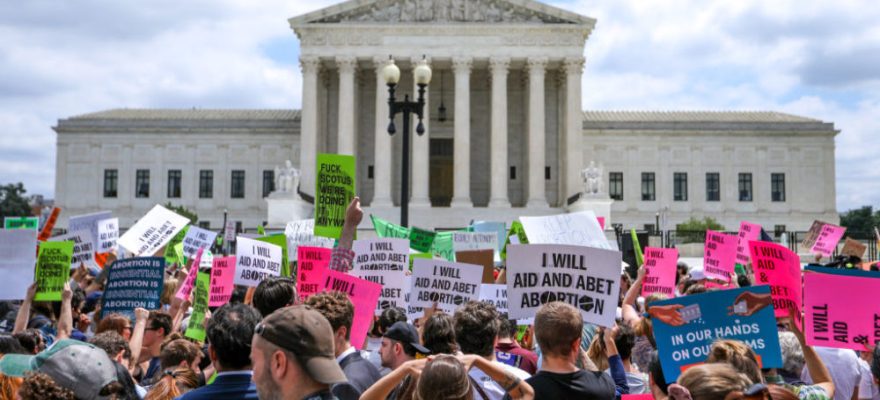
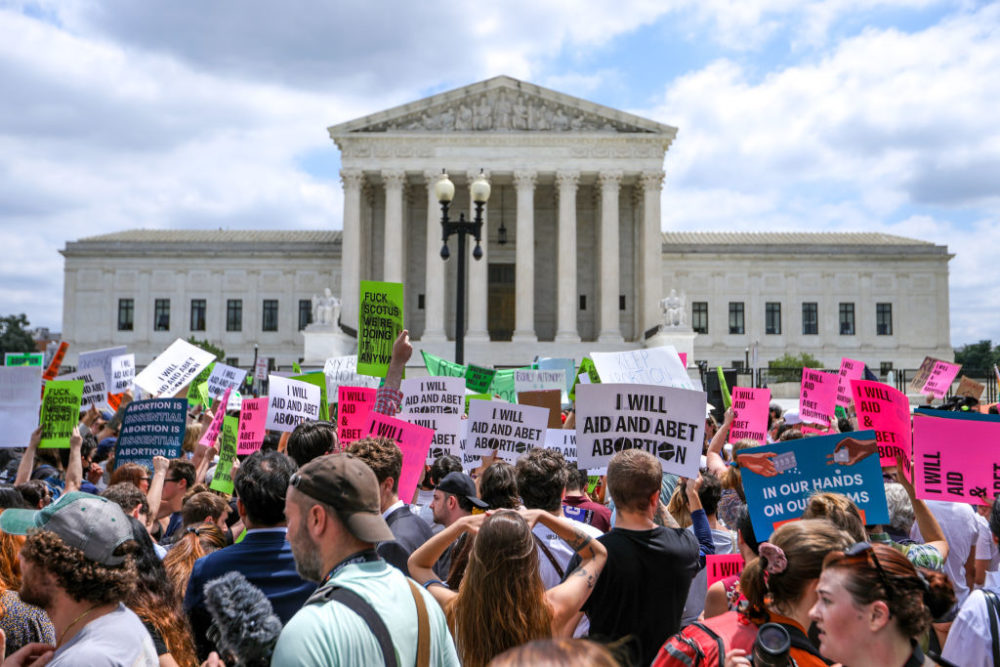
On June 24, the Supreme Court overturned Roe v. Wade, the landmark case that has been the focus of America’s abortion debate since 1973. In that decision, the 1973 court ruled that the Constitution protected a woman’s right to an abortion, with some limits. By overturning that decision, today’s court leaves abortion laws up to individual states, allowing them to ban abortion under any circumstances and at any point during pregnancy. In doing so, the Supreme Court has placed millions of women across the country at grave risk.

Continue reading

Why we should think beyond “returning to normal”

The COVID-19 pandemic affected nearly everyone on the globe, bringing with it a great deal of suffering and significant changes in the way people work and live. Despite the initially dismal US response to the pandemic, we are now among the most vaccinated countries on earth. All across the country, restrictions are relaxing, masks are coming off, travel is resuming, and people have begun returning to normal.

Unfortunately, “normal” in the US is a dire situation to begin with.

As bad as COVID was, it also brought with it several silver linings. The scope and horror of the situation forced us, for the briefest moment, to prioritize something other than profit. The rich weren’t immune to COVID-19. A far-right Republican government temporarily instituted an eviction moratorium and student debt relief, issued stimulus checks, and expanded unemployment benefits. Some essential employees received pay increases. Those who were able worked remotely, reconnecting with their families, clearing up the roads, and allowing nature some respite from our constant hustle.

For a while, it seemed like some of these changes might become permanent. Pundits and politicians seriously discussed universal basic income and student debt forgiveness. As we realized society is only as healthy as the least-healthy among us, the need for a Medicare-for-All system became apparent. Businesses explored more flexible work models, and some made work-from-home permanent.

Now, there is no “new normal.” Instead, we are rushing back to the old normal as quickly as possible.

Continue reading

The fatal flaw of George Clooney’s Catch-22

Episode 102

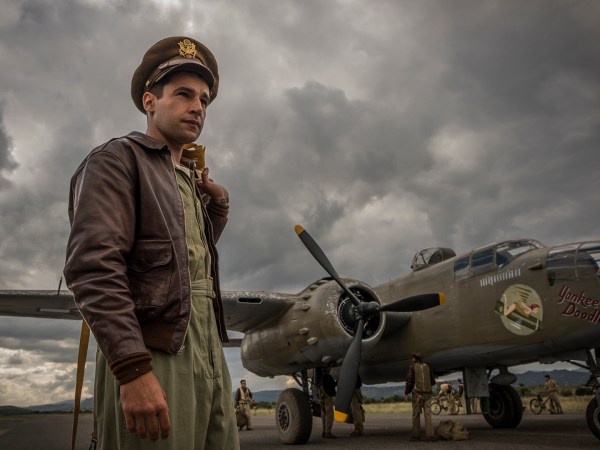
Christopher Abbott as Yossarian prepares to fly yet another mission.

Joseph Heller’s Catch-22 is a classic American novel about World War II, bureaucracy, the illogic underpinning our social charades, and the courageous use of cowardice to do the one thing that really matters: survive. It is long, dense, and nonlinear, with a large cast of characters who represent Heller’s satires of capitalism, incompetence, American exceptionalism, and more.

Previous attempts to translate Catch-22 in motion pictures proved difficult. Mike Nichols’s 1971 film fell flat before critics and audiences, though Heller himself praised it. A 1973 TV series fizzled before it got off the ground. Now, Hulu and George Clooney have produced a six-part miniseries and most reviews contend that Heller’s epic novel has finally been given the treatment it deserves. Continue reading

Stan Lee, major architect of American pop culture, dies at 95

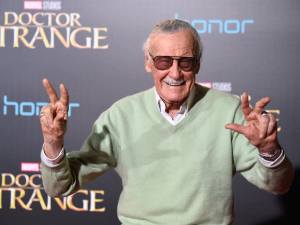
Stan Lee

“Most people retire so they can go do what they want. I’m already doing what I want. I like to write. I like to work with creative people. If I retired, I’d be giving up my fun.” – Stan Lee

Stan Lee was 95 years old, pushing 96, when he passed away on November 12. His wife of nearly 70 years, Joan, died last year. After her death, reports emerged about Lee’s own health issues and troubled personal life, including elder abuse and shady estate finagling. The writing was on the wall: the living legend’s time was coming.

Everyone whose life he touched – and they must number in the hundreds of millions – is affected. By now, the story is well-known. Lee, the editor of Timely Comics – later Atlas, and eventually Marvel – was frustrated with his industry and contemplating a career change. On his way out the door, and with two of the most imaginative artistic storytellers in the field, Jack Kirby and Steve Ditko, in his employ, Lee transformed a company known primarily for cheap genre comics into the leading innovator in superhero literature. Continue reading

Republicans plead for civility

Sanders

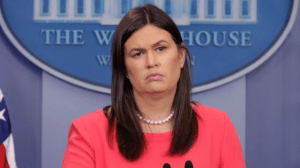
Press Secretary Sarah Huckabee Sanders was asked to leave the Red Hen restaurant, an incident that became a flashpoint in the culture war.

For three years, Donald Trump has dominated America’s cultural conversation. In that time, he has accused Mexico of sending rapists and drug dealers over the border, mocked a disabled reporter’s handicap, encouraged his crowds to physically assault protesters, and labeled journalists the “enemy of the people.” As President, he has done all he can to shred America’s life-saving social safety net, banned Muslims from entering America, and held migrant children hostage in cages. Now, Trump and his enablers are asking for one thing: civility. Continue reading