Trump admits his war is about oil. We must find an alternative.

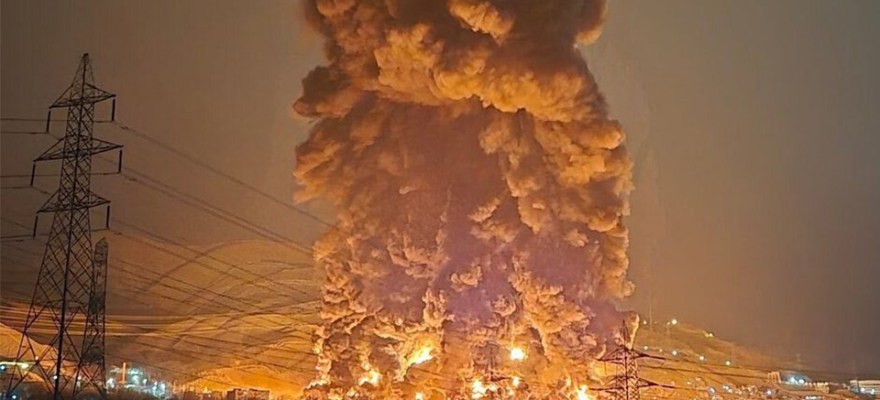
On February 28, President Donald Trump and Israeli Prime Minister Benjamin Netanyahu started a war with Iran. Since then, violence has spread throughout the Middle East. On the first day of bombing, the US bombed an elementary school, killing more than 100 children. Iran struck back, hitting Israel and US bases in the region. Israel expanded into Syria and Lebanon, bombing apartment buildings in Beirut. A few weeks ago Israel bombed oil depots in Tehran, engulfing the sky in flames and raining toxic oil on a population bigger than New York City.

But all Americans can think of, naturally, is the price of gas.

Oil is both a major driver of this war and, for now at least, the primary way Americans are feeling its effects. The war drives home the grim reality that we are hostage to this toxic ooze that burns dirty, poisons wildlife, causes cancer, and accelerates climate change. The necessity to wean ourselves off of it, as quickly and completely as possible, has never been more apparent.

An oil crisis of Trump’s own making

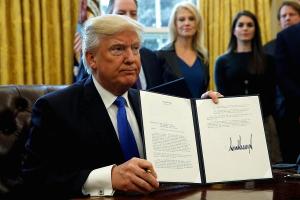
Even Trump is subservient to the whims and demands of the oil economy. Since he started the war, he’s tried desperately to control the chaotic effect his bombing campaign has had on global oil markets. Trump may not be bright, but he understands one very basic political reality: He can cover up the Epstein files, get away with all manner of fraud and graft, and even commit war crimes – but he cannot let the price of gas get too high.

From a strategic perspective, then, the focal point of the war quickly became the Strait of Hormuz, a narrow passageway out of the Persian Gulf that pinches down between southern Iran and the Omani Musandam Peninsula. The strait is an essential shipping lane for 20% of the world’s liquified natural gas (LNG), as well as a third of the global fertilizer trade. With essentially uncontested control of the strait, Iran has closed it to “enemy-linked” ships. Iran insists that non-hostile ships pay a toll in Chinese yuan, which is an attempt to undermine the supremacy of the petrodollar.

The crisis at the Strait of Hormuz is entirely of Trump’s own making, and has triggered an erratic series of threats, pleas, lies, and bargaining from him as he tries to keep his stupid war from grinding the global economy to a halt. Trump has even threatened to deploy the US Navy to escort ships through the strait. One has to wonder how sailors feel about being offered up as bodyguards for Qatari tankers, thrown into a situation where they would be wide open for Iranian drone and missile attacks.

Trump the oil imperialist

Trump sees this war almost entirely through the lens of oil. As part of alleged ceasefire negotiations, Trump claimed Iran “gave us a present… worth a tremendous amount of money… it was oil-and-gas related.” That turned out to be Iran allowing 10 oil ships through the Strait of Hormuz. Trump also implied that those high gas prices causing so many people pain at the pump are actually good for the country. Because the US is a net exporter of oil, Trump said, “When oil prices go up, we make a lot of money” – perhaps forgetting that most Americans do not own oil companies.

Compare Trump’s constant talk of oil to the Bush Administration’s 2003 invasion of Iraq. In 2003-06, calling Iraq a war for oil was considered a conspiracy theory. Dissidents and war critics were driven out of polite conversations for even bringing it up. Insinuating that the troops would ever be deployed for such an ignoble purpose was treated as beyond the pale, if not treasonous, by FOX News and the Bush White House.

This time, there’s next to no pretense of nobility in Trump’s war. While lots of motivations, with varying degrees of believability and logic, have been given – ranging from halting Iran’s nuclear capabilities to ushering in Armageddon – the Trump Administration is perfectly open about the centrality of oil to their war mission. In a way, it’s almost refreshing to hear a politician speak so forwardly about their imperialist intent, even if it does lay bare the villainy of the US empire.

In addition to the Strait of Hormuz, Trump is focused on Kharg Island, a small island in the Persian Gulf that handles up to 90% of Iran’s crude oil exports. Senator Lindsey Graham, who is among the most bloodthirsty warhawks on the planet, encouraged Trump to seize Kharg Island (and compared such an operation to Iwo Jima, in which 7,000 Marines died – no skin off Lindsey Graham’s back). Trump himself then said, while discussing his military options, “My favorite thing is to take the oil in Iran.”

Trump has long openly fantasized about using the military to conquer oil fields. In the 2016 Republican primaries, Trump was widely admired for pretending to oppose the Iraq War. But as we quickly learned, that opposition wasn’t based on principle or morals. Instead, he was mad that we didn’t plunder Iraq’s oil. In 2013, before his political career really started, he tweeted, “I still can’t believe we left Iraq without the oil.” To Trump, this is just how the world works: If your guns and bombs make bigger holes and explosions, you get to just take whatever you want, anywhere in the world. There is no right, no wrong, no law.

This also tracks with how Trump has handled the oil industry in Venezuela. Last year, Trump started claiming that Venezuela had stolen, or “unilaterally seized and sold American oil.” This claim was a reference to Venezuela nationalizing their oil industry and evicting American oil companies. Then in January, the US military raided Venezuelan President Nicolas Maduro’s home and abducted him, an astonishing breach of all international norms. Meanwhile, Trump began shadily directing Venezuelan oil revenue into an offshore Qatari account.

The need to wean ourselves off of oil

Such oil imperialism long predates Trump. Oil is the locus of US foreign policy. Just ask other offenders of the US oil monopoly, like Muammar Gaddafi or Saddam Hussein. The US military itself is the single largest institutional polluter and user of fossil fuels. It’s a dirty business that’s ruining the planet and jeopardizing our futures in countless ways, of which this despicable war in Iran is just the latest and highest-profile.

The simple answer to all this madness is to wean ourselves off of oil. It won’t be easy, and we’ll probably never be fully rid of it, but we aren’t even trying. There are a million ways we could start cutting back, a million investments we could make toward a future that is as oil-free as possible. But Trump is doing everything he can to keep us addicted to it, including starting an unpopular, illegal, and unnecessary war that imperils the world.

Trump has always been particularly pro-fossil fuel. He loves the nonsensical phrase “beautiful clean coal.” He calls green energy a “scam” and has repeatedly made the utterly deranged claim that windmills cause cancer. His administration displays a psychotic obsession with destroying green energy initiatives, most recently paying a French energy company $1 billion to cancel a wind farm and instead invest in oil and gas.

From toxic emissions to regional spills to global climate change to war, oil makes our world and our lives dirtier and less safe. Fighting wars so we can dig it up until it’s all gone – or until we are – benefits only Trump and the other billionaire barons, who couldn’t care less about the choking masses suffering under the bombs, pollution, and intolerable heat our need for oil brings about.

With a little bit of will and some leadership, we could start to control our greed and oil addiction. If we were able to do that, we might not find ourselves traipsing into the Middle East on such a regular basis. All the billionaires’ oil wars have done is waste American money and lives, kill countless men and women and children overseas, and make the rest of the world hate us. We can do better, and it starts with stopping Big Oil.
Review: “Earth’s Greatest Enemy”

When you hear the title of the new film from independent journalist/director Abby Martin and her team at The Empire Files, you may or may not have a good guess what it’s referring to. I’ll give you a hint: It’s not Martians, China, or Dr. Doom.

Earth’s Greatest Enemy is about the U.S. military, particularly its role as the planet’s biggest institutional polluter and climate change contributor. While provocative, the title is not sensationalist: It is a sober description of an entity whose activities harm virtually all life on earth, including the ones it’s sworn to protect. The film makes this case persuasively, with details and stories that will assault your conscience – and, hopefully, motivate you to join the struggle for change.

Continue reading

“Don’t Look Up” review

Billionaire CEO Peter Isherwell (Mark Rylance) and President Janie Orlean (Meryl Streep) concoct a ludicrous plot to cash in on a comet that’s about to destroy the earth.

Adam McKay and David Sirota’s Don’t Look Up, about a planet-killing comet on a rapid crash course with Earth and an America that is too distracted to do anything about it, is an allegory for our inaction on climate change. As a satire of government corruption, billionaire egomania, and celebrity culture, it is effective. And while the message is critical, the focus on parody sometimes comes at the expense of fleshing out the characters.

Continue reading

What if climate change is a hoax?

Australia blog about climate change science media coverage : Anti-carbon tax protesters in Canberra

Pro-oil protesters hold signs at a demonstration against taking action on climate change.

The most demanding issue of our time is environmental protection. Over hundreds of years of exploding populations, consumption-driven economies, and carving up the planet for resources, the human species has completely reshaped its humble home world. For decades now, scientists have warned that this behavior, unchecked, could have an ominous consequence. Science has given humanity a simple ultimatum: change our behavior or face nature’s wrath.

This has led to a deep schism. Those who are most heavily invested in the current system fight scientists’ claims aggressively. Corporate giants have spent untold millions on disinformation campaigns and disseminated their propaganda through far-right outlets. They have successfully transformed a scientific and moral issue into a political one.

But for the sake of argument, suppose the denialists are right. If we turn our resources to the fight against climate change and it turns out to be a hoax, what will we have done? Continue reading

Donald Trump’s ‘America Last’ energy policy

keystone-eo

Donald Trump displays an executive order reviving the Keystone XL pipeline.

With President Donald Trump’s revival of the Keystone XL and Dakota Access pipelines, the gauntlet has been thrown down between Americans who care for the environment and the crony capitalists who want to pillage it. Supporters who gravitated toward Trump’s economic message applauded his executive orders, but the pipelines have little to do with job creation. Far from following through on campaign rhetoric, Donald Trump’s energy policy can best be described as America Last.

Americans will suffer the consequences of these pipelines. When they break, as pipelines routinely do – 140,000 gallons of oil leaked in Iowa the day after Trump signed the executive orders – the spills will contaminate American land and American water. When the few remaining traces of our beloved public lands are given away  by the GOP and ravaged by corporate interests, Americans will live in an uglier world deprived of wilderness and natural beauty. Continue reading

Crony capitalism goes into overdrive as Trump resurrects pipelines

pipeline

Oil giant Bechtel lays a pipeline in Idaho.

Capitalists don’t come any cronier than America’s new president. The latest example, however, is particularly egregious, destructive, and obvious. Reversing some of the most hard-fought gains of environmental activists in the last several years, Donald Trump issued an executive order to push the Keystone and Dakota Access Pipelines forward. Continue reading

Trump’s true agenda crystallizes, and it’s oil imperialism

tillersonputin

Trump may never have met Putin, but his Secretary of State, ExxonMobil CEO Rex Tillerson, has received an Order of Friendship from him.

Donald Trump is less than five weeks away from being inaugurated as the 45th President of the United States. His cabinet picks offer Americans an ominous preview of what they can expect for the next four years. Corporate America will run roughshod over workers and consumers as Trump obliterates the line between big business and government. But it’s his Secretary of State pick, ExxonMobil CEO Rex Tillerson, which bodes most ominously for both the environment and international relations. Continue reading

DAPL standoff is textbook little guy vs. big business/big government

dapl-standoff

On one front, militarized police in riot gear; on the other, protesters with drums.

While the news cycle remains fixated on Washington politics, the biggest story in America is unfolding in a remote region of North Dakota. In the small town of Cannon Ball on the Standing Rock Sioux Indian reservation, activists are defending sacred burial ground and their community’s water supply against construction of a major oil pipeline. Militarized police and private security forces are there to ensure the project is completed, arresting reporters and assaulting protesters.

In America’s hotly divided political and social climate, it’s rare to find a conflict in which one party is so clearly right and the other so clearly wrong. Continue reading

Resurrect the concept of the commons

International_Flag_of_Planet_Earth.svg

Swedish artist Oskar Perenfeldt proposed this flag as the International Flag of Planet Earth to remind humanity how we are all interconnected.

Dedicated capitalists may find the idea of natural resources belonging to all people and not corporations radical, but it’s nothing new. In 1217 King Henry III sealed the Charter of the Forest, a companion piece to the Magna Carta which recognized the importance of the woods to the livelihood of Englishmen. The Charter is seen as establishing a concept of the commons: Resources such as air, water, plants, game and land should be freely accessible to barons and peasants alike, rather than paying the crown for access.

Indigenous populations throughout the millennia have often had even more forceful versions of this philosophy. In 2011 Bolivia, a nation with one of the most politically active indigenous populations on the planet, passed the Law of Mother Earth. This law took the Charter of the Forest a few steps further, protecting nature from being “affected by mega-infrastructure and development projects that affect the balance of ecosystems and the local inhabitant communities.”

Assigning sacred value to the commons is the kind of wisdom that should be informing US policy making today. Continue reading

Bundy separatists: How America tolerates right-wing protest and stomps the left

AmmonRyanBundy

Ammon Bundy, left, and Ryan Bundy, sons of infamous rancher Cliven Bundy, are leaders in the occupation.

A group of heavily armed right-wing ranchers and self-described militiamen have occupied the Malheur National Wildlife Refuge near Burns, Oregon. Their stated purpose is to protest the jail sentence of father and son ranchers convicted of arson charges, Dwight and Steven Hammond. More importantly, they are protesting perceived overreach from the federal government.

Leading the occupation is Ammon Bundy, son of Cliven Bundy, the rancher who made headlines in April 2014 for his armed standoff with the Bureau of Land Management. No shots have been fired and the group has no hostages, but they insist they are ready to defend themselves against law enforcement and claim they have enough resources to occupy the refuge for years. Continue reading