Trump admits his war is about oil. We must find an alternative.

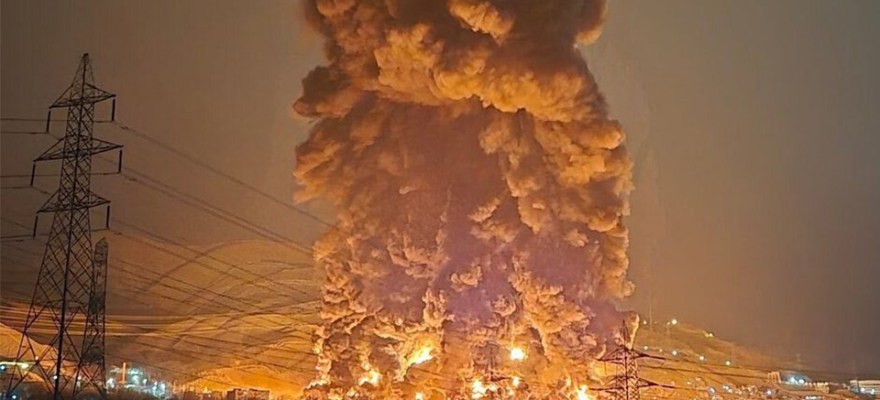
On February 28, President Donald Trump and Israeli Prime Minister Benjamin Netanyahu started a war with Iran. Since then, violence has spread throughout the Middle East. On the first day of bombing, the US bombed an elementary school, killing more than 100 children. Iran struck back, hitting Israel and US bases in the region. Israel expanded into Syria and Lebanon, bombing apartment buildings in Beirut. A few weeks ago Israel bombed oil depots in Tehran, engulfing the sky in flames and raining toxic oil on a population bigger than New York City.

But all Americans can think of, naturally, is the price of gas.

Oil is both a major driver of this war and, for now at least, the primary way Americans are feeling its effects. The war drives home the grim reality that we are hostage to this toxic ooze that burns dirty, poisons wildlife, causes cancer, and accelerates climate change. The necessity to wean ourselves off of it, as quickly and completely as possible, has never been more apparent.

An oil crisis of Trump’s own making

Even Trump is subservient to the whims and demands of the oil economy. Since he started the war, he’s tried desperately to control the chaotic effect his bombing campaign has had on global oil markets. Trump may not be bright, but he understands one very basic political reality: He can cover up the Epstein files, get away with all manner of fraud and graft, and even commit war crimes – but he cannot let the price of gas get too high.

From a strategic perspective, then, the focal point of the war quickly became the Strait of Hormuz, a narrow passageway out of the Persian Gulf that pinches down between southern Iran and the Omani Musandam Peninsula. The strait is an essential shipping lane for 20% of the world’s liquified natural gas (LNG), as well as a third of the global fertilizer trade. With essentially uncontested control of the strait, Iran has closed it to “enemy-linked” ships. Iran insists that non-hostile ships pay a toll in Chinese yuan, which is an attempt to undermine the supremacy of the petrodollar.

The crisis at the Strait of Hormuz is entirely of Trump’s own making, and has triggered an erratic series of threats, pleas, lies, and bargaining from him as he tries to keep his stupid war from grinding the global economy to a halt. Trump has even threatened to deploy the US Navy to escort ships through the strait. One has to wonder how sailors feel about being offered up as bodyguards for Qatari tankers, thrown into a situation where they would be wide open for Iranian drone and missile attacks.

Trump the oil imperialist

Trump sees this war almost entirely through the lens of oil. As part of alleged ceasefire negotiations, Trump claimed Iran “gave us a present… worth a tremendous amount of money… it was oil-and-gas related.” That turned out to be Iran allowing 10 oil ships through the Strait of Hormuz. Trump also implied that those high gas prices causing so many people pain at the pump are actually good for the country. Because the US is a net exporter of oil, Trump said, “When oil prices go up, we make a lot of money” – perhaps forgetting that most Americans do not own oil companies.

Compare Trump’s constant talk of oil to the Bush Administration’s 2003 invasion of Iraq. In 2003-06, calling Iraq a war for oil was considered a conspiracy theory. Dissidents and war critics were driven out of polite conversations for even bringing it up. Insinuating that the troops would ever be deployed for such an ignoble purpose was treated as beyond the pale, if not treasonous, by FOX News and the Bush White House.

This time, there’s next to no pretense of nobility in Trump’s war. While lots of motivations, with varying degrees of believability and logic, have been given – ranging from halting Iran’s nuclear capabilities to ushering in Armageddon – the Trump Administration is perfectly open about the centrality of oil to their war mission. In a way, it’s almost refreshing to hear a politician speak so forwardly about their imperialist intent, even if it does lay bare the villainy of the US empire.

In addition to the Strait of Hormuz, Trump is focused on Kharg Island, a small island in the Persian Gulf that handles up to 90% of Iran’s crude oil exports. Senator Lindsey Graham, who is among the most bloodthirsty warhawks on the planet, encouraged Trump to seize Kharg Island (and compared such an operation to Iwo Jima, in which 7,000 Marines died – no skin off Lindsey Graham’s back). Trump himself then said, while discussing his military options, “My favorite thing is to take the oil in Iran.”

Trump has long openly fantasized about using the military to conquer oil fields. In the 2016 Republican primaries, Trump was widely admired for pretending to oppose the Iraq War. But as we quickly learned, that opposition wasn’t based on principle or morals. Instead, he was mad that we didn’t plunder Iraq’s oil. In 2013, before his political career really started, he tweeted, “I still can’t believe we left Iraq without the oil.” To Trump, this is just how the world works: If your guns and bombs make bigger holes and explosions, you get to just take whatever you want, anywhere in the world. There is no right, no wrong, no law.

This also tracks with how Trump has handled the oil industry in Venezuela. Last year, Trump started claiming that Venezuela had stolen, or “unilaterally seized and sold American oil.” This claim was a reference to Venezuela nationalizing their oil industry and evicting American oil companies. Then in January, the US military raided Venezuelan President Nicolas Maduro’s home and abducted him, an astonishing breach of all international norms. Meanwhile, Trump began shadily directing Venezuelan oil revenue into an offshore Qatari account.

The need to wean ourselves off of oil

Such oil imperialism long predates Trump. Oil is the locus of US foreign policy. Just ask other offenders of the US oil monopoly, like Muammar Gaddafi or Saddam Hussein. The US military itself is the single largest institutional polluter and user of fossil fuels. It’s a dirty business that’s ruining the planet and jeopardizing our futures in countless ways, of which this despicable war in Iran is just the latest and highest-profile.

The simple answer to all this madness is to wean ourselves off of oil. It won’t be easy, and we’ll probably never be fully rid of it, but we aren’t even trying. There are a million ways we could start cutting back, a million investments we could make toward a future that is as oil-free as possible. But Trump is doing everything he can to keep us addicted to it, including starting an unpopular, illegal, and unnecessary war that imperils the world.

Trump has always been particularly pro-fossil fuel. He loves the nonsensical phrase “beautiful clean coal.” He calls green energy a “scam” and has repeatedly made the utterly deranged claim that windmills cause cancer. His administration displays a psychotic obsession with destroying green energy initiatives, most recently paying a French energy company $1 billion to cancel a wind farm and instead invest in oil and gas.

From toxic emissions to regional spills to global climate change to war, oil makes our world and our lives dirtier and less safe. Fighting wars so we can dig it up until it’s all gone – or until we are – benefits only Trump and the other billionaire barons, who couldn’t care less about the choking masses suffering under the bombs, pollution, and intolerable heat our need for oil brings about.

With a little bit of will and some leadership, we could start to control our greed and oil addiction. If we were able to do that, we might not find ourselves traipsing into the Middle East on such a regular basis. All the billionaires’ oil wars have done is waste American money and lives, kill countless men and women and children overseas, and make the rest of the world hate us. We can do better, and it starts with stopping Big Oil.

Last chance to get on the right side of history in Gaza – while it still exists

Gaza is almost gone. We are responsible. If you ever told yourself you’d oppose atrocities of the past, now’s your chance to prove it.

After decades of oppression and 21 months of sustained bombings, mass shootings, and forced starvation, the people of Gaza are on their last leg. Reports of the famine there are as horrific as anything in modern history. Images of children and babies emaciated to the bone pour out of the region every day, and the situation is only getting worse.

All of this is intentional, imposed on Gaza by the state of Israel and supported throughout the US government. Israel has completely obliterated the region’s infrastructure and land and is now deliberately preventing aid from getting in. Even more despicably, when aid does manage to enter the strip, Israeli soldiers slaughter the hungry people trying to reach it. This kind of massacre, one of the most depraved things anyone can imagine, is now routine.

Only now are some Western leaders and talking heads coming around. Among others, The New York Times, a longstanding and defiant supporter of Israel even through the worst atrocities, is gradually growing more critical. But plenty of observers have known for a long time that this latest flare-up between Israel and Palestine was different from previous skirmishes. This time, from the beginning, the intent and the actions have been purely genocidal.

If you’re just waking up to the horror now, then welcome aboard. It’s time to speak up. And if you haven’t woken up yet, you have precious little time left to do so. Gaza may not last much longer. And when the people there are all gone, when we’re realizing the extent of the horror we have perpetrated, you won’t be able to say you weren’t told. This is a US atrocity as much as it is an Israeli one, and every American who looked the other way shares in the responsibility. 

Continue reading

More lies, more war: Americans fall for it again

In 2015, during the Republican presidential primaries, Donald Trump stood on stage with Jeb Bush and said to his face, “The war in Iraq was a big, fat mistake… We spent $2 trillion, thousands of lives… We should have never been in Iraq… We have destabilized the Middle East… They lie. They said there were weapons of mass destruction, there were none, and they knew there were none.” 

At the time, the establishment Republican audience booed, but a star was born. Jeb Bush’s political fortunes soon crumbled. A new narrative took hold of the party. Gone would be the neoconservatives and the Bush family, replaced by a more isolationist, nationalist, “America First” movement led by Trump.

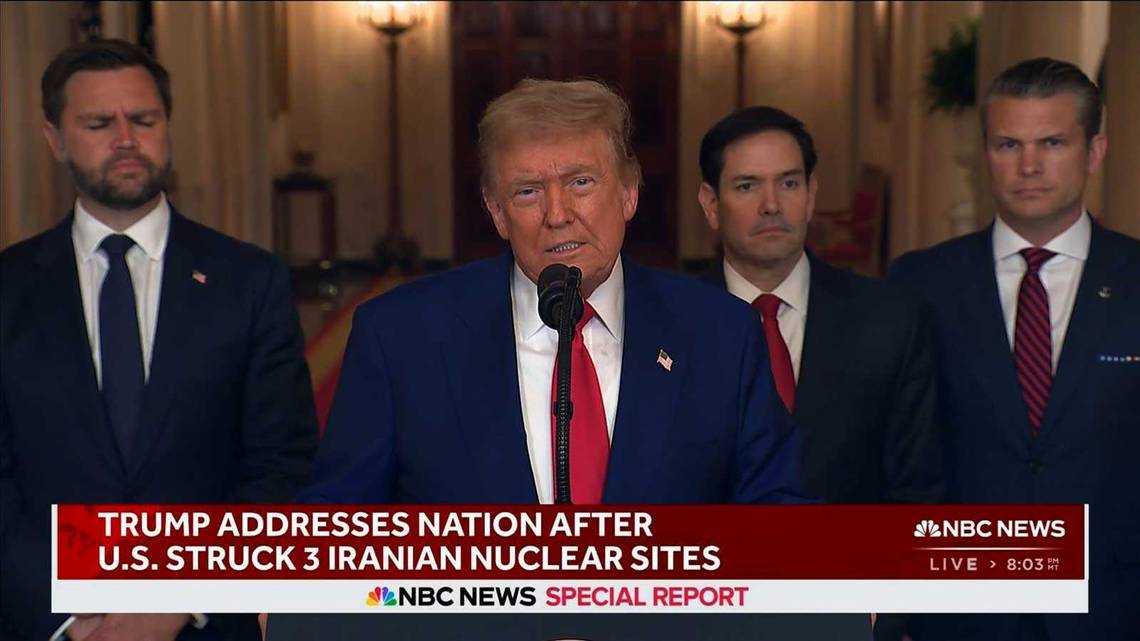
Now, with his attacks on Iran just a few months into his second presidential term, Trump is on the verge of making a catastrophic foreign policy move that threatens to dwarf the illegality, murderousness, and destabilization of the Bush Administration’s crime of the century.  

Continue reading

Madame Vice President, Do the Right Thing on Gaza

The coronation and ascent up the polls of Democratic Presidential Candidate Kamala Harris has been remarkable to witness. From out of nowhere, a person widely considered a relative dud of a Vice President, who received zero delegates during her primary bid in 2020 and zero votes in the 2024 primary (during which, of course, she was not a candidate), is now the woman chosen to beat Donald Trump. And if vibes and momentum are any indication, she may be well on her way to doing it. She has galvanized Democratic enthusiasm and is being celebrated by multiple factions of her party.

But it hasn’t all been smooth sailing for Harris and the liberal coalition. While the Republican opposition is flailing, unable to build a meaningful counter-narrative and falling back on their usual canard of hysterically painting every minimal reform as communism, on her left is a potentially more disruptive force: Americans who want their country to stop arming and funding Israel’s genocide of Palestinians in Gaza.

Continue reading

Can A Genocide Supporter Be the Lesser Evil?

If you’re on the left, despite any disappointments and misgivings you may have with the Democratic Party, you may conclude that they are the lesser evil and vote for them in most elections. This is not normally a difficult case for Democrats to make. Indeed, “not as evil as Republicans” has almost become the party’s tagline. It’s their primary selling point.

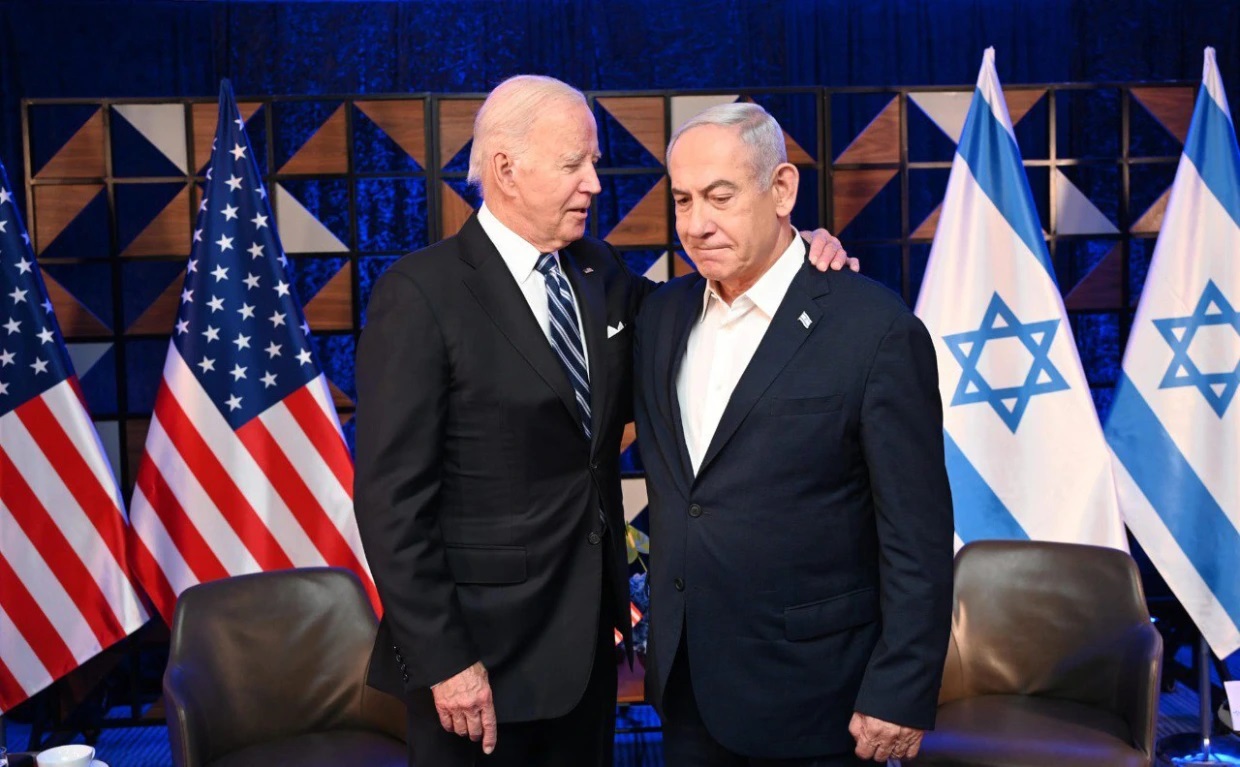
In 2024, however, President Joe Biden is struggling to make that case. He’s done a lot wrong during his years in office and a few things right. But his present support for Israel’s genocide of Palestinians in Gaza is so monstrous and criminal that no moral nation could allow him to remain president.

Continue reading

In Gaza, a Genocide by Any Other Name

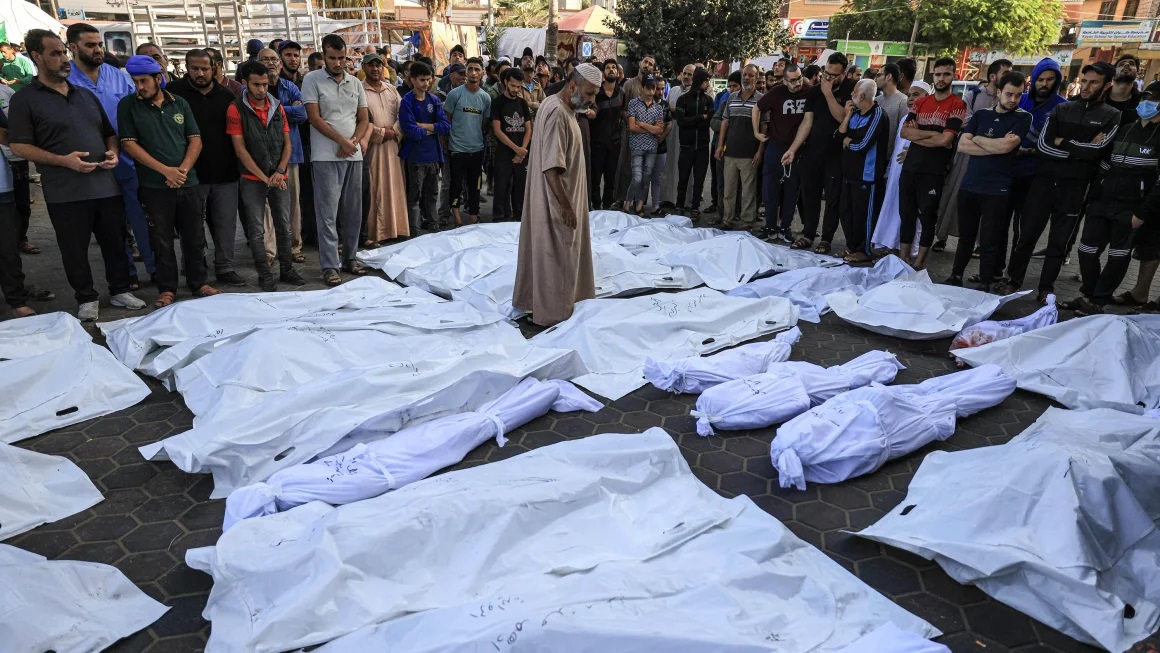
A crowd gathers around bodybags of all sizes laid out in Gaza.

For more than 100 days, Israel has been relentlessly bombing, starving, dehumanizing, and denying aid to the people in the Gaza Strip. In terms of scale and proportionality, it’s one of the most brutal assaults in memory. It’s being done in broad daylight with funding from the American taxpayer and the full support of the American political and media class.

On January 11, South Africa presented a genocide case against Israel at the United Nations’ International Court of Justice at the Hague. Their case was persuasive, outlining a long list of war crimes and genocidal rhetoric from top Israeli officials.

Despite this flurry of negative attention, Israel has carried on undeterred and Western governments have maintained their support. America and the Biden Administration continue to fund the assault and have even supported it with direct military action.

The situation feels helpless. It’s a tragedy unfolding in real time, with live updates from victims and reporters. Every day brings a new horror, and the supposed moral arbiters of the free world are looking humanity in the eyes and saying, “We’re doing this, and there isn’t a thing you can do about it.”

Continue reading

Context and Moral Perspective to Understand Israel/Palestine

Tensions between Israel and Palestine have erupted anew, reaching perhaps their most dangerous escalation yet. Things kicked off when Hamas, the leading political authority in the Palestinian territory of Gaza, slaughtered some 260 people at a music festival in Israel. Since then, all the world’s eyes have been on the region as reports of war crimes and atrocities on both sides – some exaggerated or made up, but far too many true – filter out daily. Political leaders, pundits, and ordinary people have responded to the horror with vengeful, even genocidal rhetoric.

Discussing the situation is difficult. Emotions are high, and the sheer scale of violence makes level-headedness feel almost inappropriate. Disinformation and propaganda make it hard to know the truth even for those who seek it out, and there are numerous misunderstandings about the region’s politics and history in general. Add organized religion to the mix and all the bigotries, atrocities, and accusations that entails, and it’s not hard to imagine things quickly going off the rails.

Still, it’s more important now than ever to not get carried away – though the powers that be are already well on their way to doing horrific, irreversible, history-staining crimes.

Continue reading

Pink Floyd feud becomes microcosm of broader war debate

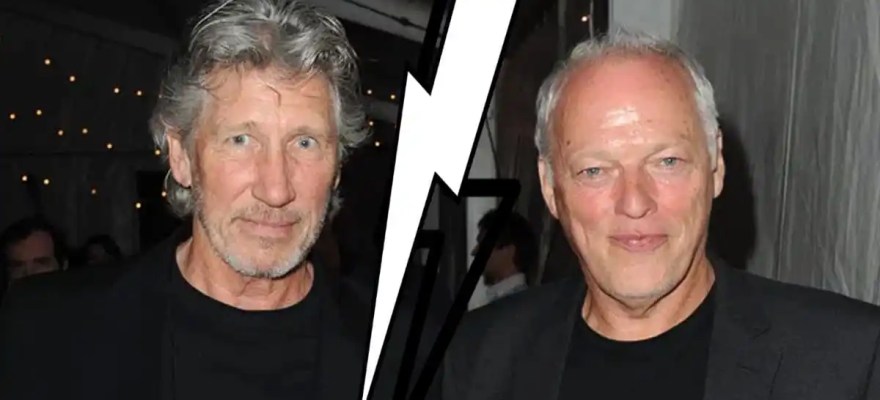
The former members of Pink Floyd have had a long-running and highly public feud ever since Roger Waters, the principal writer of the band’s best-known material, left the group in 1984. His former chief collaborator, lead guitarist David Gilmour, carried on using the band’s name, leading to bitter legal battles. Aside from a couple momentary reunions, the two showed no interest in burying the hatchet, let alone working together again.

Recently the feud exploded, going well beyond the confines of the band and bleeding into issues of geopolitics, war, and peace. On February 6, Gilmour’s wife, writer Polly Samson, tweeted, “Sadly @rogerwaters you are antisemitic to your rotten core. Also a Putin apologist and a lying, thieving, hypocritical, tax-avoiding, lip-synching, misogynistic, sick-with-envy, megalomaniac. Enough of your nonsense.” Shortly after, Gilmour concurred, tweeting, “Every word demonstrably true.”

Samson’s tweet was a shocking, vitriolic series of epithets that paint Waters as a complete and total scumbag. This is no mere difference of opinion. Plenty of people disagree with Waters, but Samson apparently sees him as an irredeemable, worthless human being who contributes nothing but evil to the world.

Continue reading

Washington hypocrisy and warmongering jeopardizes breakthrough nuclear deal with Iran

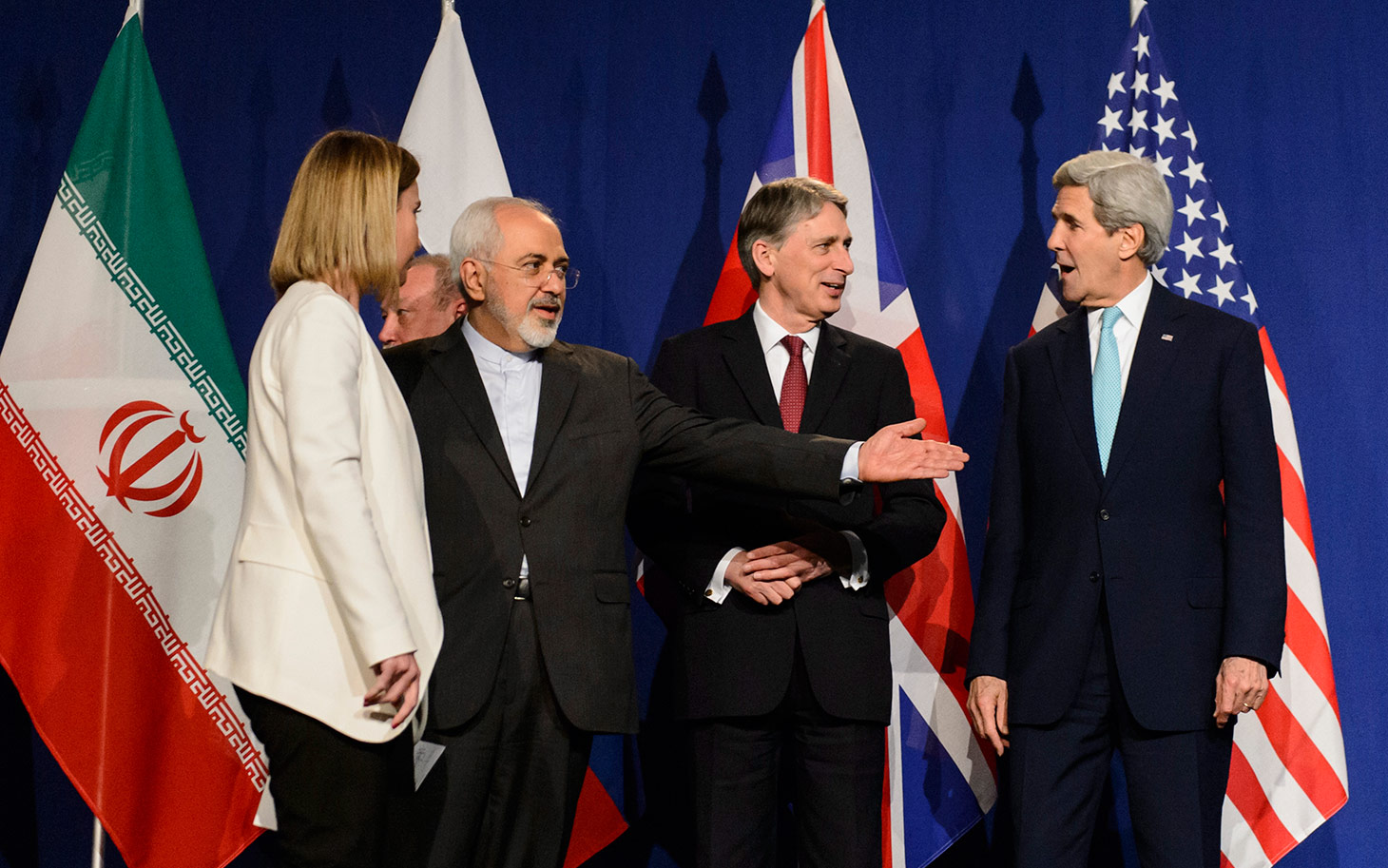
Iranian Foreign Minister Mohammad Javad Zarif, second-left, stands on stage with diplomats in Switzerland, including US Secretary of State John Kerry, far right.

Iranian Foreign Minister Mohammad Javad Zarif, second-left, stands on stage with diplomats in Switzerland, including US Secretary of State John Kerry, far right.

As diplomats from the US, UK, Russia, China, France and Germany move closer to reaching a historic deal with Iran that would temporarily block it from pursuing certain nuclear ambitions in exchange for relaxation of sanctions, Republicans are vowing to do all they can to scuttle the deal. It’s remarkable that, at a time when the first modern meaningful international agreement between the US and Iran is about to go through, Republicans are rattling sabers as aggressively as ever.

Wisconsin governor and Republican presidential candidate Scott Walker called the deal “one of America’s worst diplomatic failures.” “Instead of making the world safer,” Walker alleges, “this deal will likely lead to a nuclear arms race in the world’s most dangerous region.” In keeping with the lockstep obstructionism that has defined the GOP throughout Obama’s presidency, other Republicans have protested the deal, citing Iran’s untrustworthiness and existential threat to world peace.

For years, Washington and the news media have portrayed Iran as the most dangerous national power on the planet. That opinion is not widely shared by the global community, however, which by a significant margin places the United States at the top of a list of the biggest threats to world peace. Despite the abundance of negative public opinion on Iran in the US, the question of what exactly makes the country such a threat is rarely meaningfully explored.

A brief history of US/Iranian relations reveals everything about who should be distrustful of who. Continue reading