Last chance to get on the right side of history in Gaza – while it still exists

Gaza is almost gone. We are responsible. If you ever told yourself you’d oppose atrocities of the past, now’s your chance to prove it.

After decades of oppression and 21 months of sustained bombings, mass shootings, and forced starvation, the people of Gaza are on their last leg. Reports of the famine there are as horrific as anything in modern history. Images of children and babies emaciated to the bone pour out of the region every day, and the situation is only getting worse.

All of this is intentional, imposed on Gaza by the state of Israel and supported throughout the US government. Israel has completely obliterated the region’s infrastructure and land and is now deliberately preventing aid from getting in. Even more despicably, when aid does manage to enter the strip, Israeli soldiers slaughter the hungry people trying to reach it. This kind of massacre, one of the most depraved things anyone can imagine, is now routine.

Only now are some Western leaders and talking heads coming around. Among others, The New York Times, a longstanding and defiant supporter of Israel even through the worst atrocities, is gradually growing more critical. But plenty of observers have known for a long time that this latest flare-up between Israel and Palestine was different from previous skirmishes. This time, from the beginning, the intent and the actions have been purely genocidal.

If you’re just waking up to the horror now, then welcome aboard. It’s time to speak up. And if you haven’t woken up yet, you have precious little time left to do so. Gaza may not last much longer. And when the people there are all gone, when we’re realizing the extent of the horror we have perpetrated, you won’t be able to say you weren’t told. This is a US atrocity as much as it is an Israeli one, and every American who looked the other way shares in the responsibility. 

Continue reading
More lies, more war: Americans fall for it again

In 2015, during the Republican presidential primaries, Donald Trump stood on stage with Jeb Bush and said to his face, “The war in Iraq was a big, fat mistake… We spent $2 trillion, thousands of lives… We should have never been in Iraq… We have destabilized the Middle East… They lie. They said there were weapons of mass destruction, there were none, and they knew there were none.” 

At the time, the establishment Republican audience booed, but a star was born. Jeb Bush’s political fortunes soon crumbled. A new narrative took hold of the party. Gone would be the neoconservatives and the Bush family, replaced by a more isolationist, nationalist, “America First” movement led by Trump.

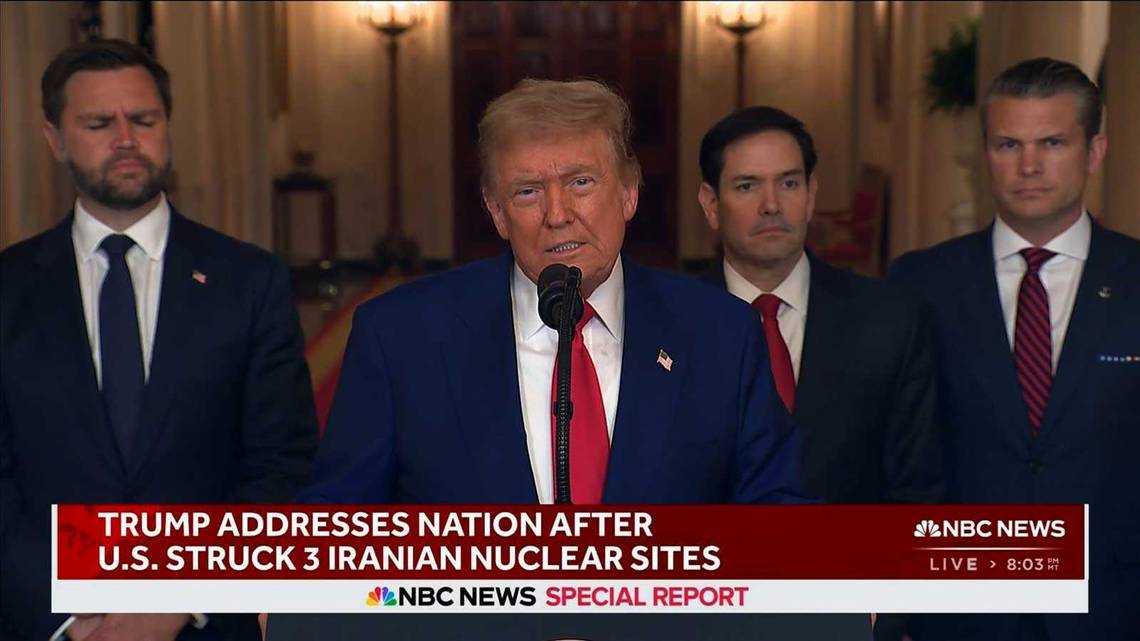
Now, with his attacks on Iran just a few months into his second presidential term, Trump is on the verge of making a catastrophic foreign policy move that threatens to dwarf the illegality, murderousness, and destabilization of the Bush Administration’s crime of the century.  

Continue reading

Media reinforces Donald Trump’s most dangerous behavior

Mosul shelling

Iraqi citizens gaze at the devastation in Mosul, where Trump-authorized airstrikes have killed hundreds of civilians.

For the first several weeks of his presidency, it looked as though mainstream media might hold Donald Trump at least partially accountable for his actions. Stories regularly aired that were critical of Trump’s brutal budget and discussed his pathological lying. All of it prompted Trump to label the media the “opposition party.” Then, late last week, Trump fired 59 Tomahawk missiles at a Syrian airbase. His fireworks show earned Trump bipartisan media and political praise.

Even before Trump launched the attack, Hillary Clinton called for it. Both the Democratic Senate and House Minority Leaders, Chuck Schumer and Nancy Pelosi, praised the attack, as did prominent Republican critics of Trump like John McCain and Lindsey Graham. Liberal CNN commentator Fareed Zakaria declared Trump “became president of the United States” with the attack while NBC host Brian Williams described the bombing as “beautiful.” FAIR found that of 47 editorials published in major papers, only one was critical. Continue reading

Stop ‘trump’ing up the threat of Islamic terror

ISIS

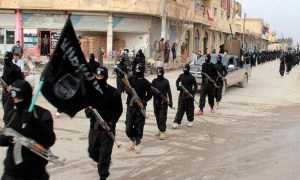
ISIS soldiers march in Raqqa, Syria, the terrorist organization’s de facto capital.

Radicalized Islamic terrorists have become the focal point of national security concerns and much of the 2016 presidential election. Not without good reason – groups like ISIS, al-Nusra Front, Boko Haram, al-Qaeda and others are among the most barbaric gangs of cold-blooded killers, kidnappers, torturers, rapists, sex traffickers and drug dealers ever. But treating them as an existential threat superseding the Nazis, as some have done, is granting them way too much legitimacy. Continue reading

ISIL thrives on mayhem – don’t give it to them

Parissolidarity

The Brandenburg Gate is lit in solidarity with Paris on Saturday, Nov. 14 in Berlin, Germany. ignacionimo/Instagram

On Friday, November 13, the city of Paris was laid siege by a small band of terrorists from the Islamic State who raided a theater, a concert hall, a soccer stadium and other venues using AK-47s and suicide bombs to. No final tally has been released and many victims remain hospitalized, but at least 129 are known to have died. In terms of death toll, it’s the worst attack in France since World War II.

In addition to the French massacre, ISIL is responsible for downing a Russian airplane carrying 224 tourists to Egypt. The day before the Paris attack ISIL detonated bombs in Beirut, Lebanon, claiming dozens more lives. These attacks are in addition to many smaller ones, the group’s destruction of culture, and the atrocities committed against women, hostages and apostates in ISIL-controlled territory.

After the attacks, French President Francoise Hollande called for the eradication of the Islamic State and declared France at war. France has since launched several air strikes against the Islamic State in Raqqa, Syria, which has served as a capital since roughly 2013. Among the targets were an Islamic State “command post, jihadist recruitment center and weapons and ammunition depot,” as well as a “terrorist training camp.” Continue reading

Washington hypocrisy and warmongering jeopardizes breakthrough nuclear deal with Iran

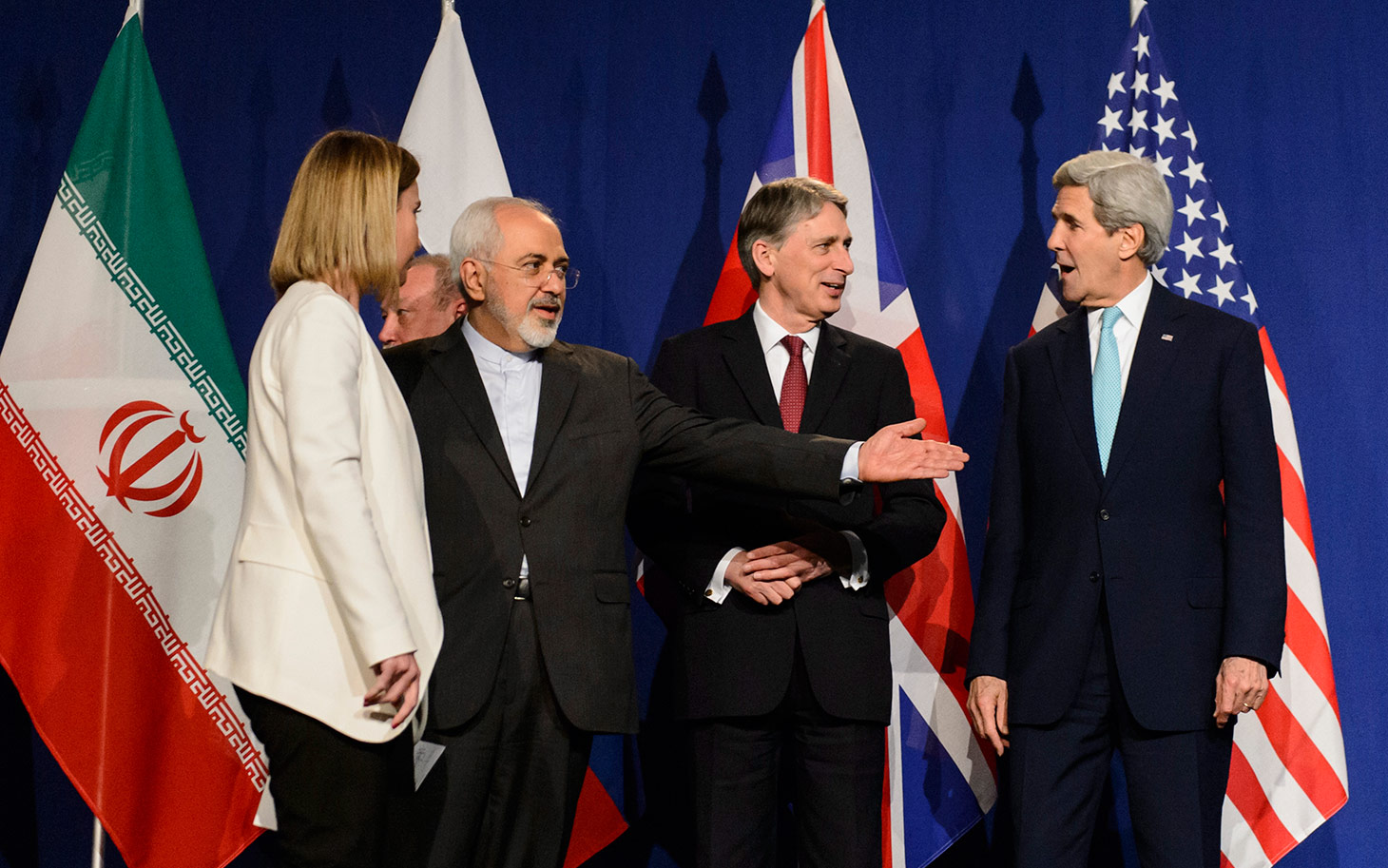
Iranian Foreign Minister Mohammad Javad Zarif, second-left, stands on stage with diplomats in Switzerland, including US Secretary of State John Kerry, far right.

Iranian Foreign Minister Mohammad Javad Zarif, second-left, stands on stage with diplomats in Switzerland, including US Secretary of State John Kerry, far right.

As diplomats from the US, UK, Russia, China, France and Germany move closer to reaching a historic deal with Iran that would temporarily block it from pursuing certain nuclear ambitions in exchange for relaxation of sanctions, Republicans are vowing to do all they can to scuttle the deal. It’s remarkable that, at a time when the first modern meaningful international agreement between the US and Iran is about to go through, Republicans are rattling sabers as aggressively as ever.

Wisconsin governor and Republican presidential candidate Scott Walker called the deal “one of America’s worst diplomatic failures.” “Instead of making the world safer,” Walker alleges, “this deal will likely lead to a nuclear arms race in the world’s most dangerous region.” In keeping with the lockstep obstructionism that has defined the GOP throughout Obama’s presidency, other Republicans have protested the deal, citing Iran’s untrustworthiness and existential threat to world peace.

For years, Washington and the news media have portrayed Iran as the most dangerous national power on the planet. That opinion is not widely shared by the global community, however, which by a significant margin places the United States at the top of a list of the biggest threats to world peace. Despite the abundance of negative public opinion on Iran in the US, the question of what exactly makes the country such a threat is rarely meaningfully explored.

A brief history of US/Iranian relations reveals everything about who should be distrustful of who. Continue reading

Oil-driven imperialism birthed Mideast terrorism; ISIL

The Middle East has been the focus of great fuss in the century or so since the discovery of its oil. Iraq has been of particular interest to the U.S. since the 1980s, when the Reagan administration supplied Iraqi leader Saddam Hussein with weapons in his war against Iran, where a revolution had recently overthrown U.S.-installed leadership. When Hussein began acting aggressively without U.S. blessing in the early 90s, Washington turned on him. Since then, Iraq has been subjected to sanctions deemed “genocidal” by the UN diplomat responsible for overseeing them and military actions leading to the deaths of over a million Iraqis and the complete devastation of their infrastructure. In addition, there is widespread sectarian violence where previously there had been almost none as Sunnis and Shias turn on one another amid the chaos of war to fill political power vacuums. Continue reading